Why Stem Story Kits
Our Research & Rationale
Future-Ready Foundations
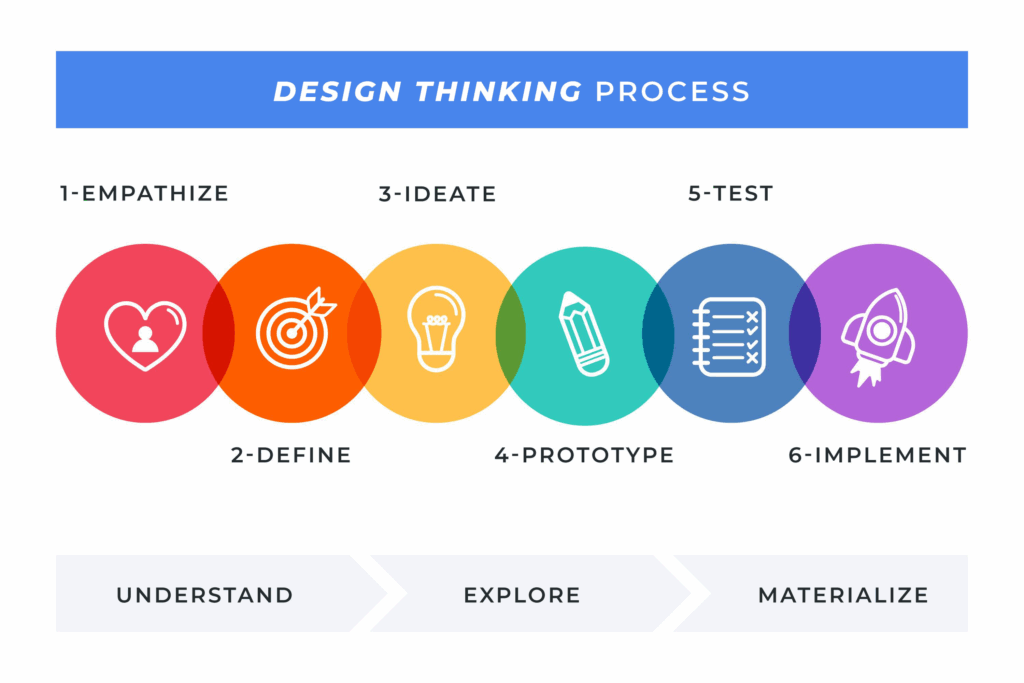
STEM Story Kits aim to transform school communities by utilizing Design Thinking as a foundational framework (Razzouk & Shute, 2012). Design Thinking empowers elementary-age students to focus their thinking and engage their families and friends in the learning process. As an instructional approach, Design Thinking establishes a strong basis for exploring STEM careers, skills, and dispositions, fostering future-ready and resilient students (Fortus et al., 2018). By navigating challenges and designing solutions, students contribute to and transform their communities.
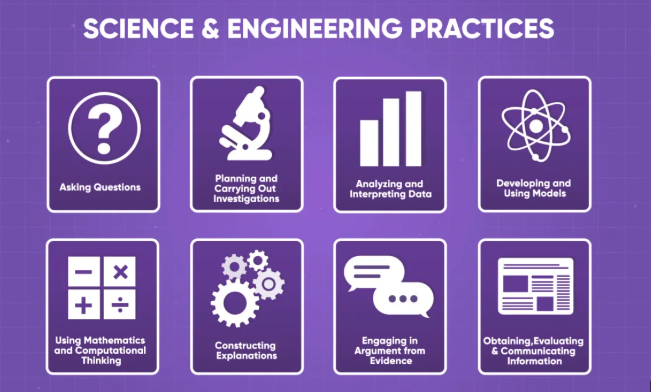
Design Thinking, rooted in problem-based learning, guides designers through a process of identifying needs, defining information, considering possibilities, taking action, and iteratively revising until satisfied (Plattner, Meinel, & Leifer, 2011).This process fosters critical and creative thinking, aligning with Mathematics and Science and Engineering Practices (Bleiler, Baxter, Stephens, & Barlow, 2015; Common Core State Standards Initiative, 2010; Fuson, 2023; National Council of Teachers of Mathematics, 2000; National Research Council, 2001; National Research Council, 2012; Olson, Olson, & Capen, 2014). Students utilize Design Thinking to organize information, analyze decisions, evaluate problems, and seek knowledge. It serves as both a creative and practical approach to address real-world issues and fulfill human needs, applicable to various fields (Scheer et al., 2009).
Our Goals & Guiding Questions
Our kits have four primary goals that correspond with our mission of creating experiences that are personal, relevant, fun and experiential.
1.
Foster critical thinking and problem-solving skills.
2.
Inspire flexible and action-oriented thinking.
3.
Cultivate a positive mindset towards failure and iteration.
4.
Encourage confident sharing of work and ideas.
Guiding Questions unite all of STEM Story Kits – no matter the topic.
What value does imaginative/fearless thinking add to something I create or do?
How does engaging in making and creating make me an innovator?
STEM Story Kits Reaching ALL Learners
STEM Story Kits are thoughtfully crafted with the principles of Universal Design for Learning, ensuring that all learners can access and engage with STEM in meaningful ways, as described by CAST (2024), such as:
STEM Story Kits promote engagement by incorporating choice, flexibility, and real-world connections, allowing students to personalize their learning experiences and connect with the material in ways that resonate with their interests.
learning preferences.
of action and expression by offering various ways for students to demonstrate their understanding, such as building models, creating presentations, or
writing reflections.
References
Bleiler, S. K., Baxter, W. A., Stephens, D. C., & Barlow, A. T. (2015). Constructing meaning: Standards for mathematical practice. Teaching Children Mathematics, 21(6), 336–344. https://www.jstor.org/stable/10.5951/teacchilmath.21.6.0336
CAST. (2024). Universal Design for Learning Guidelines version 3.0. Retrieved from http://udlguidelines.cast.org
Common Core State Standards Initiative. (2010). Common core state standards for mathematics. National Governors Association Center for Best Practices and Council of Chief State School Officers.
Fortus, D., Krajcik, J., Dershimer, R. C., Marx, R. W., & Mamlok-Naaman, R. (2018). Design-based science and real-world problem-solving. International Journal of Science Education, 40(18), 2067-2090.
Fuson, K. C. (2023, April 12). Building math talk for sense-making in the classroom [edWebinar]. edWeb. https://home.edweb.net/webinar/math20230412/
National Council of Teachers of Mathematics. (2000). Principles and standards for school mathematics. National Council of Teachers of Mathematics.
National Research Council. (2001). Adding it up: Helping children learn mathematics. National Academy Press.
National Research Council. (2012). A framework for K-12 Science education: Practices, Crosscutting Concepts, and Core Ideas. Washington, D.C.: The National Academies Press.
Olson, T. A., Olson, M., & Capen, S. (2014). The Common Core standards for mathematical practice: Teachers’ initial perceptions and implementation considerations. Journal of Mathematics Education Leadership, 15(2), 11–20.
Plattner, H., Meinel, C., & Leifer, L. (2011). Design thinking: Understand, improve, apply. Springer Science & Business Media.
Razzouk, R., & Shute, V. (2012). What is design thinking and why is it important? Review of Educational Research, 82(3), 330-348.
Scheer, A., Noweski, C., & Meinel, C. (2012). Transforming constructivist learning into action: Design thinking in education. Design and Technology Education, 17(3), 8-19.